Stickman Coin Flip begins with something that almost needs no explanation: flipping a coin. You perform the action, wait for the result, and collect your reward. It sounds too simple, but the game quickly adds new layers of progression, turning the initial table into an increasingly large money-making system.
Each flip can have two major outcomes:
This divide means that it is not enough to only look at the amount of money. You can make money extremely rapidly, but you still need to get Skull Tokens to unlock additional elements of the system.
As you improve the coin types are slowly unlocked, giving a distinct feeling of scale:
Each new coin kind is a milestone. What was the main source of income in the previous stage can easily become a stepping stone to the following level.

When the number of upgrades grows, you can treat gaming in three ways:
See if your gains increase owing to the value of each coin or the amount of flips.
helpers cut down on manual work and help in resource acquisition.
Perks and multipliers can be better than a single upgrade if the right ones are chosen.
This kind of gaming produces a very apparent point of change. At first you’re concerned with each flip, but later on you’re concerned with the performance of the whole system.
Helpers are not an automatic feature. They change the role of the player.
You start doing activities that bring in money for you instead of always doing stuff. While you work on unlocking new coins, upgrading helpers or assigning talents, you can continue gathering resources.
That's where Stickman Coin Flip takes on more of the qualities of an idle game than a regular clicker.
The Talent Tree is loaded with more than 20 talents, geared toward bonuses and multipliers. It adds a motivation to think about how to spend resources rather than merely buying whatever enhancements are available.
One way of developing can stress speed, another efficiency in the long run.The game thus adds another layer of choice behind the seemingly simple numbers.
At some point, current progress can be exchanged for long-term benefits through Prestige.
This is a trade-off decision:
Losing what you currently have to make the next development more efficient.
Resetting too early might prevent you from fully utilizing your current playthrough. But holding your progress for too long can also make growth less efficient. Therefore, Prestige raises a more interesting question than “upgrading what”: when should you start again?
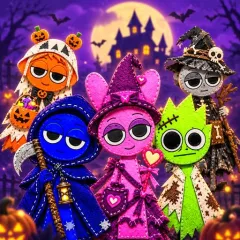
Skull Token also opens the way to the Capsule Machine. Here, helpers can receive decorative items with various themes.
Some variations include:
These cosmetics aren't central to the economic system, but they help make the helper team less monotonous and create additional objectives once you're familiar with the money-making loop.
Stickman Coin Flip doesn't need to turn coin flipping into a complex mechanism. Instead, the game constantly places small decisions around it.
That's why a very small idea can still form a relatively long loop. The 2D pixel-art graphics keep things light, while the upgrade system handles much of the gameplay depth. Stickman Coin Flip is therefore suitable for those who like to watch a small system gradually grow larger, rather than needing complex levels right from the start.